From Catwalk to Sidewalk: Charting The Row’s own Style Journey
This label occupies a odd yet enviable place in fashion. Established in 2006 by Mary-Kate and Ashley Olsen, the house began as a muted counterpoint to the clamor of celebrity-driven labels and has developed into one of the most influential names in understated luxury. No logo announces itself on the front of a bag, no branding is stitched visibly into a coat lapel — yet the cognoscenti recognize it instantly. The Row’s runway shows in Paris are famously sparse and deliberate, often stripped of music or spectacle, letting the clothes and accessories speak for themselves. That very restraint now serves as the label’s boldest declaration. Tracking the shift of that catwalk restraint into everyday demand, particularly for row bags and row handbags, reveals almost everything about fashion’s direction in 2026.
The fascinating part of this trajectory lies in the distance between runway spectacle and real-world wearability. Many houses show clothes that never leave the runway intact; The Row does the opposite. From the very start, its collections are designed to be worn, carried, and revisited season after season. Because of this outlook, the row fashion approach stands as a model of durability over trend-chasing, and that’s most evident in the row margaux bag the handbag line, which ranks as the most searched, talked-about, and resold category the brand offers.
The Beginning: Minimalism as Rebellion
At the time The Row debuted, minimalism was far from the prevailing sensibility it has since become. The mid-2000s were loud — logos, embellishment, low-rise everything. Against that backdrop, the Olsens introduced tailored trousers, unmarked leather goods, and a colour palette that rarely strayed from black, cream, and camel. Six years passed before the brand gained serious critical traction, with fashion editors slowly recognising that the pared-back construction wasn’t a lack of ambition but an entirely different kind of craftsmanship.
The brand’s earliest row bags embodied that identical ethos. No conspicuous hardware vied for notice, no monogram fabric was used — only clean lines and richly dense, high-quality leather. This was a deliberate departure from the “it bag” era, where recognisable logos were the primary driver of desirability. The Row bet that shoppers would eventually tire of overt status symbols and crave something subtler. That gamble eventually paid off, though gradually — it took almost ten years for the broader market to catch up with what the brand had been doing all along.
Fashion insiders and tastemakers had, in the early part of that decade, rallied around the label attentively, prizing fit and material above logo-driven appeal. Difficult to find and rarely discounted, these garments stayed expensive, which merely deepened their sense of rarity. For almost twenty years, this scarcity model has remained largely intact, explaining why an authentic markdown event is even now considered uncommon rather than an annual given.
The Margaux Effect and the Rise of Cult Bags
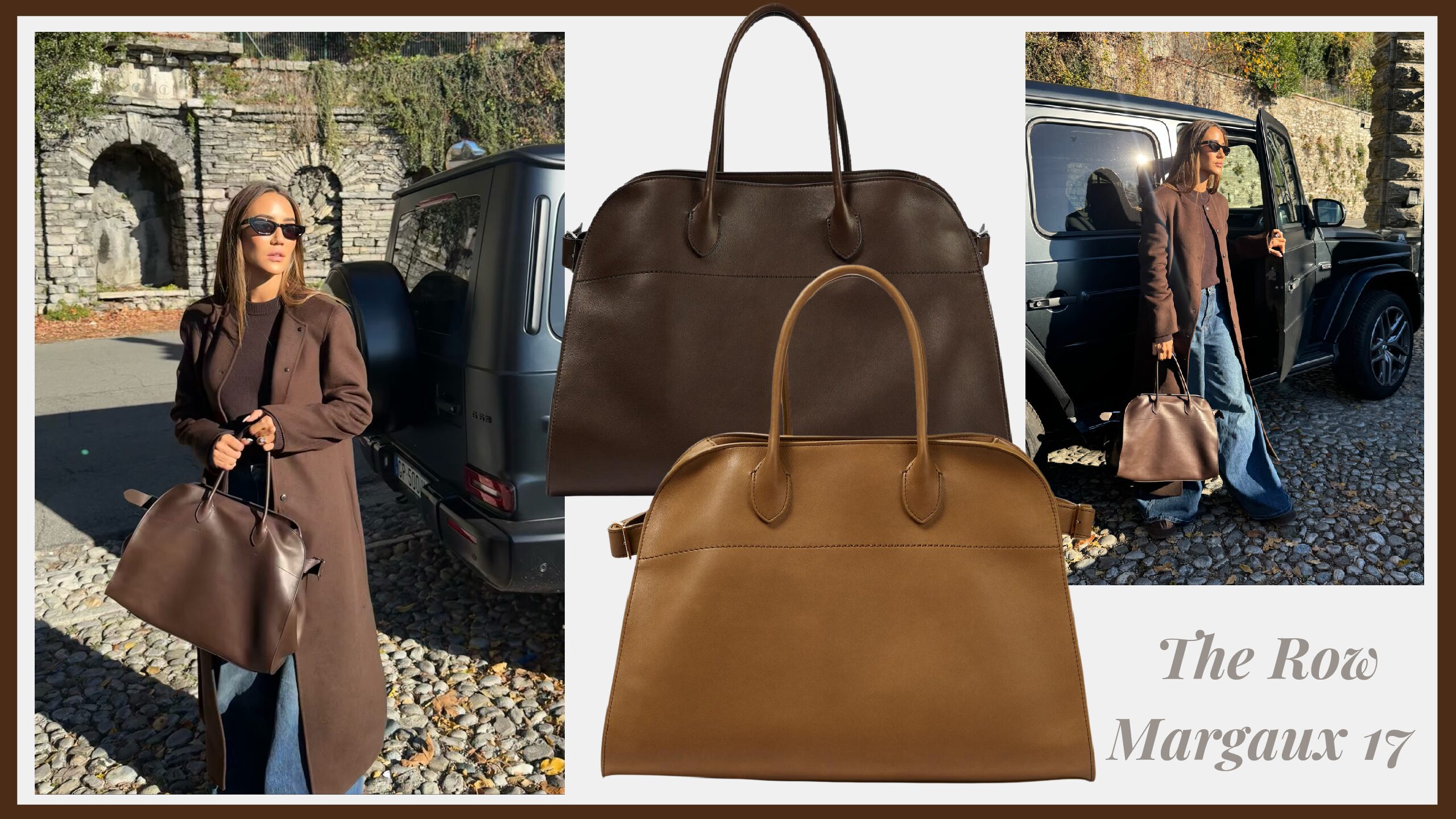
If there’s a single accessory responsible for shifting The Row from under-the-radar label to broad cultural obsession, it’s the Margaux tote. Structured, unfussy, and instantly recognisable to those with an eye for such things, the Margaux turned into shorthand for low-key luxury. Queries about where to buy the row margaux bag spiked repeatedly between 2019 and 2023, and by 2026 it continues to be one of the most requested styles among personal shoppers and resale platforms alike.
The Margaux’s draw lies in its adaptability. It reads as a work bag, a travel companion, and an off-duty carryall depending on how it’s styled, which accounts for why it routinely features on lists of the top-rated row bags. In contrast to many designer totes, which prioritise form over usability, the Margaux was built with genuinely usable interior space, a detail practical buyers appreciate as much as aesthetes do.
Past the Margaux itself, several other styles have earned cult-like standing. Its smaller top-handle designs and softly structured shoulder bags often feature in round-ups covering the top row bags of recent years. What ties them together isn’t a single silhouette but a consistent design language: minimal hardware, deliberate proportions, and leather that ages well and gains character rather than wearing down badly. As a result, the resale market for row bags notably strong — buyers keep them rather than flipping them quickly, which keeps supply tight and demand steady.
Looking at the Figures: Popularity and Pricing
Figures drawn from resale sites and search-trend monitors gives a useful, non-anecdotal view of how The Row’s accessories business has evolved. Interest in the row tote bag category has grown steadily rather than spiking unpredictably, which is uncommon in a fashion market often driven by viral moments. That steadiness suggests the appeal is built into the product itself — grounded in repeat purchases and long-term satisfaction — rather than trend-driven hype that fades within a season.
The table below summarises broad positioning across three commonly referenced style categories within The Row’s handbag range, based on publicly discussed characteristics rather than fabricated numbers.
| Silhouette Grouping | Where It’s Commonly Used | Aftermarket Interest Level | Style Identifying Trait |
|---|---|---|---|
| Rigid Tote Bags (e.g., Margaux) | Daily use, travel, and work contexts | Elevated | Structured silhouette, minimal hardware |
| Relaxed Shoulder-Style Bags | Night-Out and casual styling | Mid-to-Elevated | Relaxed leather form with discreet strap styling |
| Handle-Top Bags in Smaller Form | Layered outfits and errands | Mid-Level | Downsized proportions with precise stitching |
A rundown like this is valuable for those conducting a row bags overview before committing to a purchase, since the categories diverge in terms of both everyday practicality and lasting resale worth. The structured-tote category tends to hold value best because they’re the most in-demand and frequently pictured, while the compact top-handle style is valued more for adaptability than resale upside.
Street-Style Culture’s Part in Driving Demand
While the runway establishes direction, it’s off-duty style that solidifies a bag’s place in culture. Paparazzi and street-style photographers have spent years photographing editors, stylists, and off-duty models toting the row bag of the moment outside shows in Paris, Milan, and New York. Such unposed photos have possibly done more to drive interest in the row handbags than formal campaign imagery ever could, because they show the products functioning in real life — hung off a shoulder, tucked under an arm, worn with jeans instead of couture.
This grassroots attention has generated a feedback loop. As these candid photos spread more widely, more shoppers hunt for specific styles, which increases resale prices, which in turn increases the perceived exclusivity of owning the bag in the first place. It’s a self-reinforcing cycle that few brands manage to sustain for more than a few seasons, yet The Row has maintained the momentum for nearly two decades without needing flashy marketing campaigns to sustain it.
Style critics have also pointed out that The Row seldom leans on gifting bags to celebrities or influencers in the way many contemporary labels do. Most of this exposure appears unforced, built from authentic, self-funded buys rather than paid partnerships. Regardless of whether each case is truly unpaid, the brand’s public image benefits from seeming genuine rather than transactional, which matters a great deal to the quiet-luxury shopper who is often skeptical of overt advertising.
The Row’s Position Heading Into 2026
As 2026 approaches, The Row shows no signs of loosening its grip on the quiet-luxury segment. In fact, competitors have spent the last few years attempting to copy its formula — minimal branding, premium materials, pared-back runway shows — with uneven results. Hardly any have equaled the consistency of The Row’s design language across seasons, which remains its biggest competitive advantage.
Markdowns on authentic row items are rare and typically slight in scale, something buyers hunting for a sale should understand; such reductions tend to surface around end-of-season clearance, not through steep discounting.
The brand’s market stance has remained intact thanks to this intentional restraint, even though broader luxury markets keep grappling with rising price pressures and changing buyer attitudes.
Going forward, expect ongoing growth of the accessories range rather than sweeping transformation. The brand’s growth strategy has always favoured incremental refinement over radical change, adding new color variations or understated design refinements to proven bestsellers instead of pursuing passing fads. For anyone building a long-term wardrobe around classic staples, that reliability is the whole idea — which is why the label’s evolution from runway curiosity to real-world wardrobe fixture continues to feel less like a passing moment and more like a permanent shift in how quiet luxury is defined.